
1 min readThe MTOZERO team
Facility management: why large complexes need a maintenance system, not a complaints book
One broken light. The report comes in: "There's a problem on the ground floor." The technician spends an hour searching the whole floor.
Multiply that by hundreds of faults a year and you get unknown maintenance costs, assets failing early and unhappy tenants.
What makes a CMMS different from a complaints book?
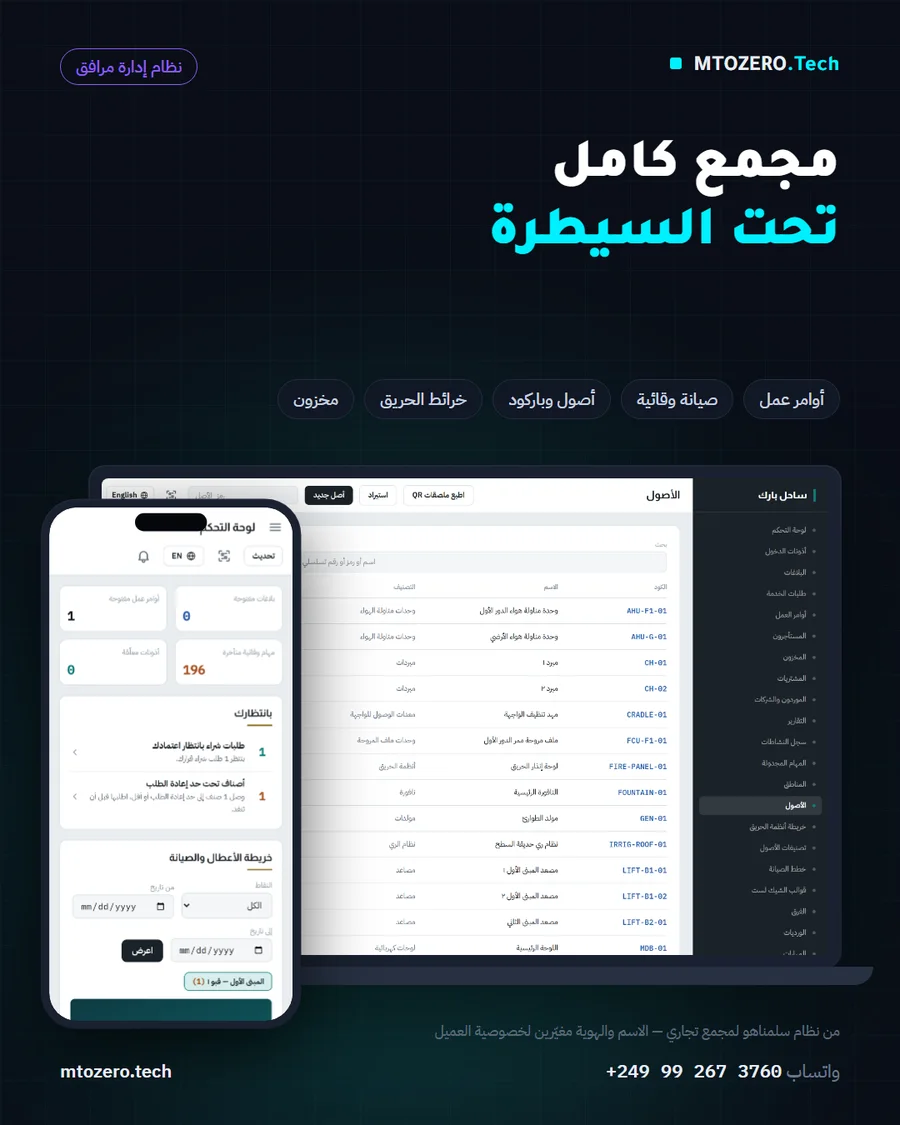
Every request carries its exact location: building, floor, zone and asset
Every request becomes a work order with an owner, a deadline and a status
Preventive maintenance schedules itself: AC filters, generators, lifts, fire devices
Every asset has a history: when it was serviced, at what cost, by whom
Management sees all of it on one screen
Preventive is cheaper than emergency
Equipment serviced on time lasts longer, and a sudden failure always costs more: rush parts, night call-outs and closed shops.
Tenants are a special case
In commercial complexes, some areas are maintained by tenants and others by management, and a technician needs approval before entering a tenant's unit. A good system knows the difference and keeps responsibilities clear.
We built a system like this for a multi-building commercial complex. The same approach works for hospitals, universities, factories and hotels.